
Fun 10-Minute Math Games for K–5 at Home
September 16, 2026 · 5 min read
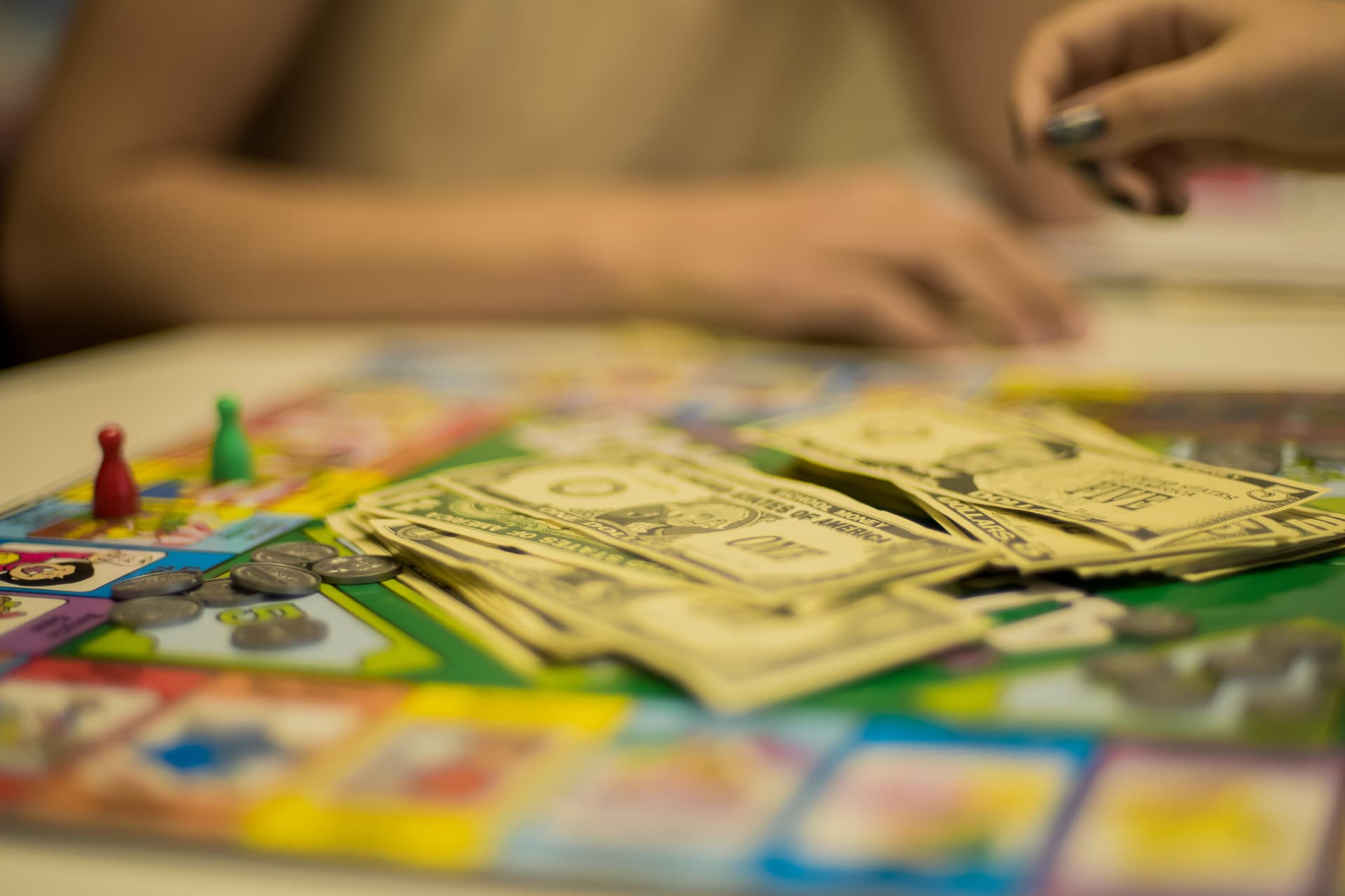
One of our favorite ways to “trick” kids into math is by playing games.
As parents, we can forget how much children learn when they are having fun. But math is everywhere: in movement, snacks, errands, stories, cards, and everyday conversations. A few playful minutes can help children practice number sense, facts, measurement, and problem-solving—without making it feel like another assignment.
Here are a few easy ways to get started.
Count everything
Invite your child to count the things they already notice.
How many windows are on the house? How many dogs are in the book? How many cars are on the train? How many marshmallows are floating in their cocoa?
For younger children, simply counting aloud is valuable practice. For older children, add a challenge: “If we add two more, how many would there be?” or “How many fewer are there than yesterday?”
Toss, catch, and skip-count
Grab a ball and toss it back and forth while counting.
Start with skip-counting by 2s, 5s, or 10s. As children grow more confident, use the tosses to practice math facts:
- 3 + 4!
- 7 × 6!
- 18 ÷ 3!
The movement keeps the energy up, and the repetition builds fluency without feeling like flashcards.
Add dice to any game
Most games can become math games when you add dice.
Roll two dice and have your child add, subtract, or multiply the numbers. Young children can count the dots or count spaces as they move across a board. Older children can roll three dice, create equations, or try to reach a target number.
And remember: any game with scorekeeping is already a math game. Let your child keep the score, compare totals, and figure out who is ahead—and by how much.
Bring out a deck of cards
Card games are an amazing source of math play, so take out a deck.
Try simple number comparisons: each player flips a card, and the higher number wins. Play “Make 10” by finding pairs that add to 10. For older children, use two cards to make addition, subtraction, multiplication, or division problems.
A deck of cards can become a complete math toolkit in less than ten minutes.
Put your child in charge at the store
A quick trip to the store can become real-world math practice.
Ask your child to help estimate the total, count money, calculate change, or compare prices. Older children can help figure out tax or discounts. Even a simple question—“Do we have enough for both items?”—builds practical number sense.
Make time a math conversation
A watch or clock gives children countless chances to practice math.
- What time is it?
- How much longer until we leave?
- How long ago did we start?
- If dinner is at 6:00 and it is 5:35, how many minutes do we have?
Time is one of those skills that becomes easier when children use it all day long.
Cook up some math
Baking and cooking are wonderful measurement activities.
Let children measure ingredients, count scoops, compare fractions, set timers, or double a recipe. Ask questions as you go: “We need two cups, and we already added one. How much more do we need?”
They may think they are making cookies. You will know they are practicing math.
Keep it playful
The goal is not to turn every moment into a lesson. It is to help children see that math is useful, approachable, and part of everyday life.
Start with ten minutes. Follow their interests. Laugh when an answer is silly. Celebrate effort and curiosity.
The best math games are often the ones your child does not even realize are math.